Severe Weather Events Impact Bangladesh
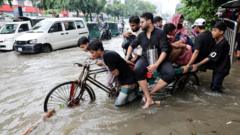
In recent days, Bangladesh has faced devastating rainfall and flash floods, leading to the loss of at least 51 lives and affecting more than a million people across the country. These natural disasters have resulted in widespread displacement, with thousands losing their homes due to the flooding and landslides, particularly impacting the capital city, Dhaka, and other regions.
Impact on the Rohingya Refugee Community
A significant portion of the fatalities, totaling 28, have occurred in Cox's Bazar, a region that hosts a large Rohingya refugee population. The district, known for being the world's largest refugee settlement, has been severely affected by the heavy rain. Tragically, among the deceased are several students and a teacher who perished when floodwaters inundated their school.
Bangladesh's geography, characterized by its low-lying terrain and numerous rivers, makes it particularly susceptible to severe weather events during the monsoon season. Experts have noted that climate change is exacerbating the intensity and frequency of rainfall, posing ongoing challenges for the country.
Government Response and Ongoing Challenges
The heavy rains, which began more than a week ago, have intensified in recent days, prompting authorities to issue alerts regarding potential floods and landslides. In response, families in high-risk areas have been evacuated, and government shelters are currently housing thousands of displaced individuals. Additionally, student exams have been postponed as a precaution.
As of Sunday, over a million people have reported being impacted by the torrential rains. In Dhaka, the capital, many streets remain waterlogged, causing significant traffic disruptions. Residents have reported floodwaters reaching knee height in several areas, highlighting the challenges faced by the city's drainage infrastructure.
Future Outlook and Concerns
Local media have raised concerns about the effectiveness of previous government efforts to improve Dhaka's drainage systems. Meanwhile, Sarder Udoy Raihan from the Flood Forecasting and Warning Centre has expressed optimism that conditions in the southeast may improve soon. However, he cautioned that the ongoing monsoon activity could lead to further flooding, particularly in the northeastern and northern regions of Bangladesh.
The situation remains a pressing issue for the nation, as it continues to grapple with the impacts of climate change and the resulting environmental challenges.
Source: Original Article